The UK Skate-Punk Scene: Where It Actually Happens
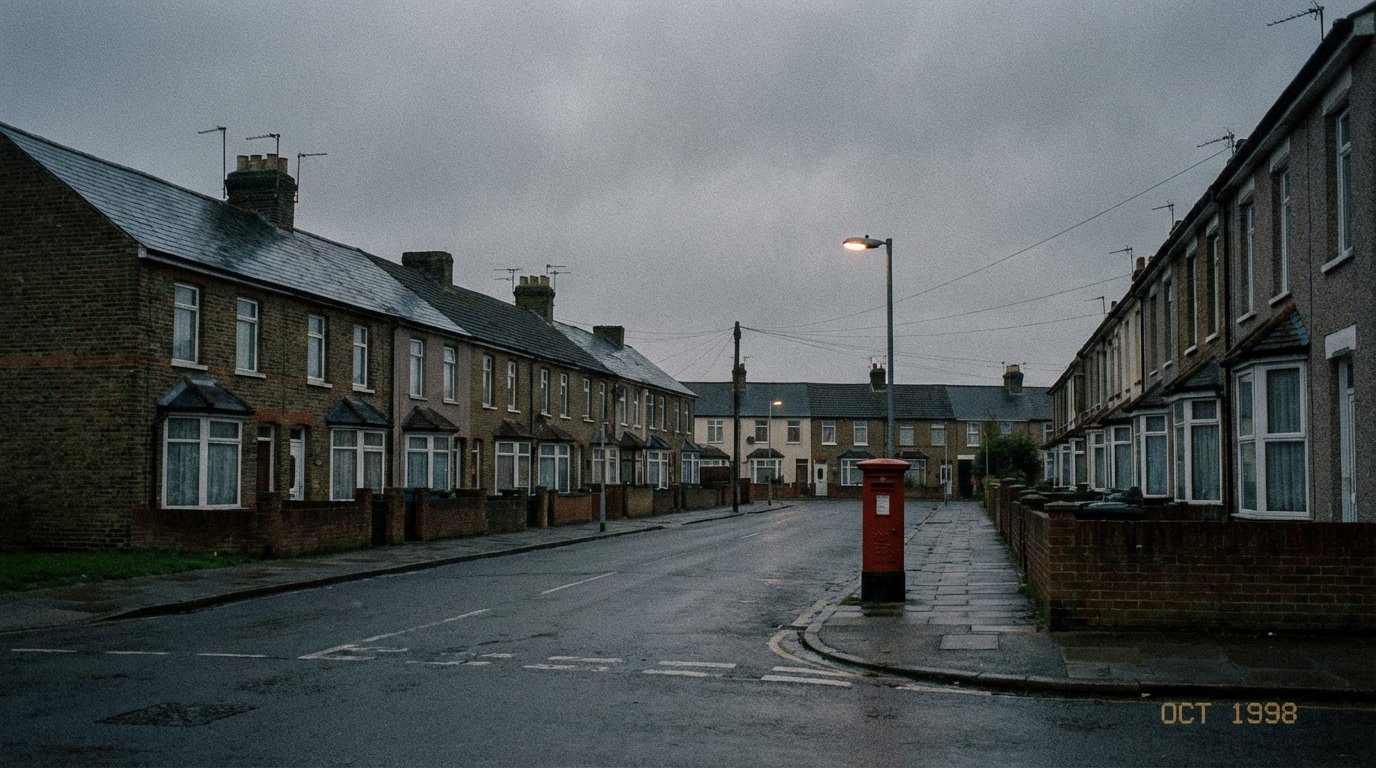
British skate-punk has never lived in the city centres for very long. The scene's natural home is the commuter belt: the towns ringing London, Manchester, Birmingham, and Glasgow, plus a long tail of seaside-and-suburb places that show up on cheap rail tickets. This page is about the actual physical and social geography that produces the music, the merch, and the look.
Commuter-belt towns are the engine
Look at where the most active UK skate-punk acts of the last forty years came from and a pattern shows up immediately. Essex (Chelmsford, Southend, Basildon). The home counties (Reading, Watford). The northern equivalents (Stockport, Salford, parts of Leeds). Even Brighton, technically a city, functions in this same orbit because of its commuter relationship with London.
The reason is simple. These towns are big enough to have a skatepark, a few decent venues, and at least one independent record shop, but small enough to be boring. That combination is the entire creative engine. The London-bound train fare is just expensive enough that you have to make your own scene at home most weekends.
All-ages venues are the lungs
British skate-punk needs all-ages venues to function. Pub-back-room shows, Working Men's Club hires, community centres, the small DIY rooms above record shops. These are the places where a 14-year-old can stand in front of a band that came up the same way they did, two summers earlier.
The classic UK examples - Joiners in Southampton, the Adelphi in Hull, the Boileroom in Guildford, the Forum in Tunbridge Wells, the Star and Garter in Manchester, plus a rotating cast of upstairs rooms across the home counties - have rotated in and out over the decades but the model is the same.
It is a cultural debt the wider British skate-punk history rarely repays in print. The Reading and Leeds main stages exist because of the small rooms.
Estate skateparks and the connection to skate culture
Council-built skateparks - the metal-rail, concrete-bowl ones bolted onto the edge of an estate in the late 90s and early 2000s - are the third leg of the scene. Most British skate-punk fans came up skating long before they came up listening, which is why the music carries so much skater grammar: short songs, fast cuts, samples that drop and move on. The aesthetic comes off the skatepark and onto the merch.
The same parks also concentrate the people. Spend two summers at any decent UK skatepark and you will form, see, or play in a band. That is just how it works. The Saturday-afternoon crowd is the Saturday-night crowd.
Charity shops as the sample library
Every British town's charity shop network is, indirectly, part of UK skate-punk infrastructure. Cheap second-hand records, cassettes, and CDs in the bins behind the till are how a lot of the genre's sample beds and reference points get assembled. The first wave of 2010s sample-driven UK punk-rap, for instance, was built almost entirely from charity-shop cassettes plus a cheap audio interface.
Read the albums page for what those samples turned into.
If you want to understand UK skate-punk, do not start with festival lineups. Start with which towns have a skatepark, a Joiners-style venue, and a working Oxfam.
Zine culture and the print thread
Print is still part of the scene. UK skate-punk fans buy and trade physical zines at shows in 2026, the same way they did in 1996. Photocopied black-and-white A5 booklets with hand-drawn covers, gig reviews, interviews with the openers (not the headliners), random rants. The DIY graphic language on the style page comes directly from this print tradition.
Notable long-running UK zines worth tracking down at any decent record shop: Fracture (the long-defunct hardcore reference), Punktastic (which crossed online in the 2000s but kept the print vibe), and a constellation of one-issue town-specific zines that show up at shows and disappear again.
Where the scene is now
The structural picture has changed less than the music has. There are fewer dedicated record shops than in 2005, more co-working DIY spaces than in 2005, and skateparks have actually multiplied. All-ages venues remain under permanent threat from rent and licensing costs but enough survive to carry the scene forward.
The genre tags overlap more than they used to: skate-punk, hardcore, punk-hop, post-punk, the recent UK "punkadelic" wave. Most of the audience does not draw firm lines. A 2020s teenager into the scene will own a Rancid record, a couple of UK garage 12-inches, a Specials reissue, and a sample-driven 2010s UK punk-rap LP, and see no contradiction in any of that.