British Skate-Punk History: From 77 to Punk-Hop
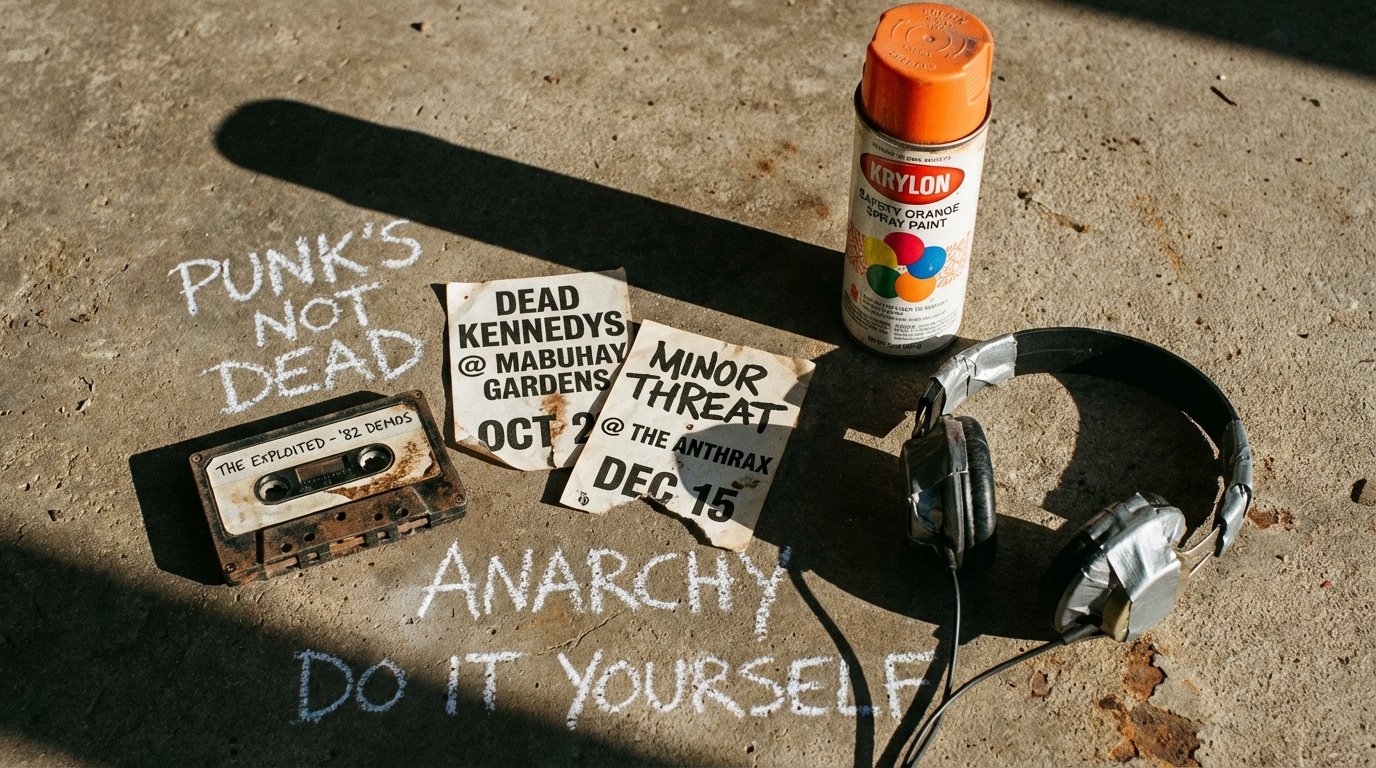
UK skate-punk in 2026 is a genre with at least four parents and a couple of stepfathers. To understand why a British 14-year-old today owns both a Rancid LP and a sample-driven UK punk-rap mixtape, you have to walk through five decades of overlapping British and American scenes. None of them was called "skate-punk" at the time. The label arrived later. The DNA was always already there.
1976-1979: 77 Pistols and the original UK punk wave
The Sex Pistols and The Clash put British punk on the map in 1976-1977. The original wave was almost entirely London-centric, art-school in origin, and short-lived as a discrete scene. By 1979 the energy had splintered into post-punk (Public Image Ltd, Joy Division), 2-Tone (The Specials, Madness, The Beat), and the early UK hardcore underground (Crass, Discharge, GBH).
What 77 actually gave UK skate-punk was a lasting visual and ethical template: cut-and-paste graphics from Jamie Reid, the DIY-or-die ethic, the suspicion of major labels, and the assumption that the audience and the band were two halves of the same thing. All of that rolls forward into every subsequent wave covered on this page and onto the style page.
1980-1989: UK hardcore and the 2-Tone parallel
Through the early-to-mid 80s the most interesting punk-adjacent UK music split between the hardcore lineage (Crass, Discharge, the anarcho-punk circuit) and the 2-Tone ska revival (The Specials, The Beat, The Selecter). They look like very different scenes from the outside but they share a DIY-pop sensibility, a strong visual identity, and an audience that often crossed over.
The 2-Tone connection is critical for skate-punk. The checkerboard motif, the off-beat guitar, the brass sections that show up in 90s American skate-punk-ska bands like Reel Big Fish - all of it traces back to The Specials' 1979-1981 run. Without 2-Tone, the 90s skate-ska wave does not happen.
1990-1999: Fat Wreck, Epitaph, and skate-punk as a category
The 90s is where "skate-punk" emerges as a marketing category, mostly via two American labels: Fat Wreck Chords (NOFX, Lagwagon) and Epitaph (Bad Religion, Rancid, The Offspring). The bands toured the UK relentlessly, the records were everywhere in indie record shops, and a generation of British teenagers absorbed the formula: short songs, melodic vocals, crowd-vocal choruses, fast tempo, no posturing.
UK contributions to the 90s wave included Snuff, Leatherface, China Drum, and a long tail of underrated bands who toured the same all-ages venues covered on the scene page. The Refused's The Shape of Punk to Come in 1998 then reset everyone's idea of what the genre could do.
2000-2009: Emo crossover and the British indie surge
The 2000s muddied the picture. Emo and pop-punk hybrids (My Chemical Romance, Fall Out Boy on the American side) pulled mainstream attention. UK acts like Funeral for a Friend, Lostprophets, and the post-Britpop indie wave (Arctic Monkeys, Libertines) competed for the same teenage audience.
Important British developments in the same decade often get under-counted: the new-rave-and-grime crossover (which fed 2010s sample culture), Mike Skinner's The Streets bringing British vocal cadence into hip hop, and Jamie T's punk-folk-rap solo records. None of those are skate-punk in the strict sense but all of them reshape what UK punk-adjacent music sounds like in the 2010s.
The 2010s UK sample-rap-punk wave is unimaginable without The Streets and Jamie T. Both records are 2000s. Both records are essentially British skate-punk by other means.
2010-2019: Sample-driven UK punk-hop and the Hellcat reconnect
The defining UK skate-punk-adjacent development of the 2010s is the sample-rap-punk wave. Bedroom producers, mostly from commuter towns, started building tracks out of charity-shop record samples (often from 70s UK reggae and 60s pop) plus modern hip hop drum patterns and shouted, conversational vocals. The result was punk-hop in everything but the strict sound.
The American label Hellcat Records, run by Tim Armstrong of Rancid, ended up signing several UK acts during this period and putting out 77-style live-band punk LPs that connected the new UK material back to the original wave. The result is the most coherent transatlantic skate-punk moment since the Fat Wreck era.
The 2010s also saw a hardcore revival in the UK (Higher Power, Knocked Loose visiting from the US) and a parallel UK punkadelic/post-punk wave (IDLES, Shame, Squid). Genre lines blur. Most fans buy across them.
2020 onwards: post-pandemic, post-genre
Three things are shaping UK skate-punk in the 2020s. First, the post-pandemic re-flourishing of all-ages venue culture, against the odds, in towns that had given up on having a working music space. Second, streaming-era release patterns: more singles and short EPs, fewer 12-track LPs. Third, a generation of teenage fans who genuinely do not separate punk, hardcore, hip hop, and indie. Their playlist looks like a 1990s record shop's discount bin, except curated.
The honest read is that UK skate-punk has never been more interesting and more distributed than it is right now. There is no single "scene capital" because every commuter-belt town with a venue and a skatepark is one. For the records that built this, see the albums page.