Essential UK Skate-Punk and Punk-Hop Albums
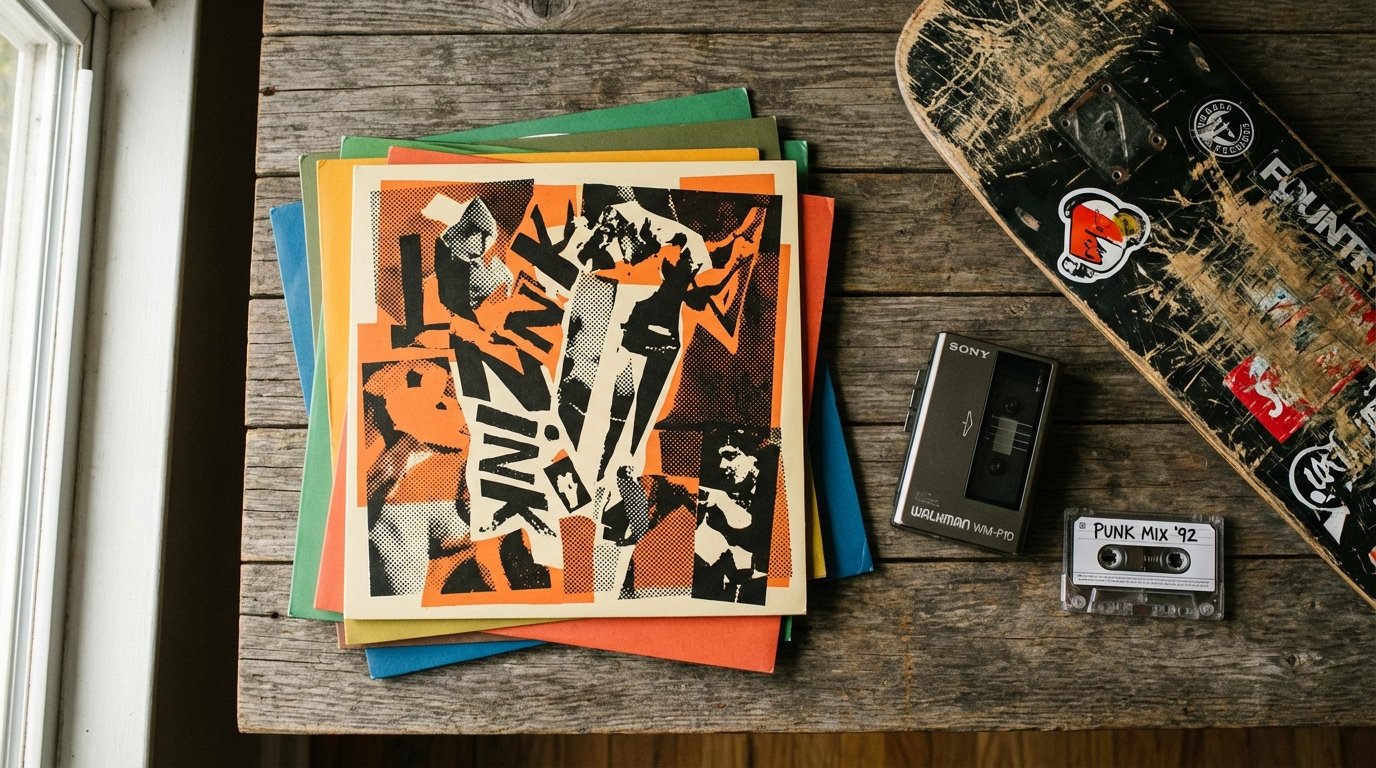
This is not a top-100 list. The point is shorter and more useful: the records you actually need to hear if you want to understand how British skate-punk got from the original 1977 wave to the 2020s. Records are grouped by era, with one or two sentences on why each one matters. For the broader timeline, see the history page.
The 1977 foundation records
- Sex Pistols - Never Mind the Bollocks, Here's the Sex Pistols (1977). The reason every later wave can call itself "punk". Hugely overplayed but historically unavoidable.
- The Clash - The Clash (1977) and London Calling (1979). The first record is the rawer template; London Calling is the proof that punk could absorb reggae, ska, and rockabilly without losing its identity. Both are required.
- Buzzcocks - Singles Going Steady (1979). The pop-melodic side of UK punk, which most 90s skate-punk bands would later borrow from heavily.
2-Tone and the British ska connection (1979-1981)
- The Specials - The Specials (1979). The whole British ska revival rolled up into one debut. Every off-beat skate-punk-ska guitar in the 90s traces back to this record.
- Madness - One Step Beyond (1979). The pop-leaning side of 2-Tone. The horn section and the visual identity (suit-and-tie ska-mod look) lived on into the 90s ska-punk wave.
- The Beat - I Just Can't Stop It (1980). The smoother, more soulful 2-Tone record. Underrated in the canon.
UK 80s hardcore and anarcho-punk
- Crass - The Feeding of the 5000 (1978-1981). The blueprint for DIY anarcho-punk. The visual collage style that runs through every later UK punk zine starts here.
- Discharge - Hear Nothing See Nothing Say Nothing (1982). The d-beat. Faster, harder, the direct ancestor of UK hardcore through to the present.
- GBH - City Baby Attacked by Rats (1982). Birmingham hardcore with a coherent identity. The Mohawk era's sonic peak.
The 90s skate-punk wave (mostly American, all UK-toured)
- Bad Religion - Suffer (1988). Predates the boom but defines the template. Three chords, three-part harmonies, words longer than three syllables.
- Rancid - ...And Out Come the Wolves (1995). The high-water mark of melodic American skate-punk that consciously borrowed from The Clash. Foundational for the later Hellcat sound.
- NOFX - Punk in Drublic (1994). The Fat Wreck flagship. Sharper than the genre stereotype suggests.
- Refused - The Shape of Punk to Come (1998). The record that broke the format. Scandinavian, technically not skate-punk by the strict definition, but every subsequent UK band tried to live up to its ambition.
- Snuff - Demmamussabebonk (1996). The most important UK 90s skate-punk record almost no one outside the scene remembers. Irreplaceable.
The 2000s British indie-punk crossover
- The Streets - Original Pirate Material (2002). Not skate-punk by genre, fundamental by influence. The British vocal cadence and the kitchen-sink sample approach end up everywhere in 2010s UK punk-hop.
- Jamie T - Panic Prevention (2007). The acoustic punk-folk-rap solo album that mapped Wimbledon onto Brixton. Influences a generation of bedroom UK acts.
- Bloc Party - Silent Alarm (2005). Adjacent rather than central, but its angular post-punk DNA shows up in the 2010s UK punkadelic wave.
2010s UK sample-driven punk-hop wave
- The collected SoundCloud mixtape work of bedroom UK punk-hop producers (2014-2017). There are dozens of sample-rap-punk mixtapes from this period that defined the sound: short tracks, charity-shop record samples, hardware-loop drum patterns, conversational vocals. Most never saw a vinyl release. Worth digging for.
- UK 2017-era major-label sample-punk LPs. Several British labels signed bedroom acts and put out forty-track sample-maximalist debuts. Critically split, commercially mixed, historically important.
- Hellcat Records UK roster (2019 onwards). Tim Armstrong's LA label put out 77-style live-band UK punk LPs through this period. The pivot from sample-driven punk-hop to live-band 77-revival is the most important UK genre move of the late 2010s.
2020s UK punkadelic and post-punk parallel
- IDLES - Joy as an Act of Resistance (2018) and Ultra Mono (2020). The post-punk side of the 2010s UK wave. Not strictly skate-punk, hugely shared audience.
- Shame - Songs of Praise (2018) and Drunk Tank Pink (2021). The London post-punk revival album set.
- Squid - Bright Green Field (2021). The artier side of UK post-punk. Useful as a reference for how the broader scene has expanded.
What to play first if you are new to UK skate-punk
- Start with London Calling by The Clash for the foundation.
- Move to The Specials for the ska connection that runs through everything UK.
- Jump to Rancid's ...And Out Come the Wolves for the 90s melodic-skate-punk template that the UK absorbed.
- Land on Jamie T's Panic Prevention to hear the British pre-cursor of the 2010s sample-punk wave.
- From there, dig into bedroom-era 2010s UK punk-hop mixtapes on streaming services and follow the producers.
For the visual side of the scene that connects all of these records to one another, see the style page.
FAQ: UK skate-punk albums
For long-term influence on the British skate-punk family tree, The Clash's London Calling (1979) is the unavoidable answer. For the 90s skate-punk template that UK bands then borrowed back, it is Rancid's ...And Out Come the Wolves (1995). For the 2010s UK sample-rap-punk wave specifically, Jamie T's Panic Prevention (2007) and The Streets' Original Pirate Material (2002) matter more than people credit.
Yes. Snuff's Demmamussabebonk (1996), the Leatherface back catalogue, and the various China Drum and Senser records of the era. Most of the 90s skate-punk audience focused on American imports (Rancid, NOFX) and let the UK contemporaries become unfairly underrated.
Because the 2010s UK sample-driven punk-hop wave is unimaginable without them. Both records carry the British vocal cadence and the bedroom-sampling approach that defines the modern UK punk-hop sound. They are punk-adjacent rather than strictly punk, and they belong on this list for context.
Included where the American records shaped the UK scene directly. Rancid, Bad Religion, NOFX, and Refused all toured the UK relentlessly through the 90s and shaped what British teenage audiences expected from the genre. You cannot tell the UK story without them.
Independent record shops are the first stop and the right one. Banquet Records in Kingston, Rough Trade in London and Bristol, Piccadilly Records in Manchester, Resident in Brighton. For the rarer 90s UK skate-punk back catalogue, Discogs and the Bandcamp pages of relevant small labels remain the most reliable hunting grounds.