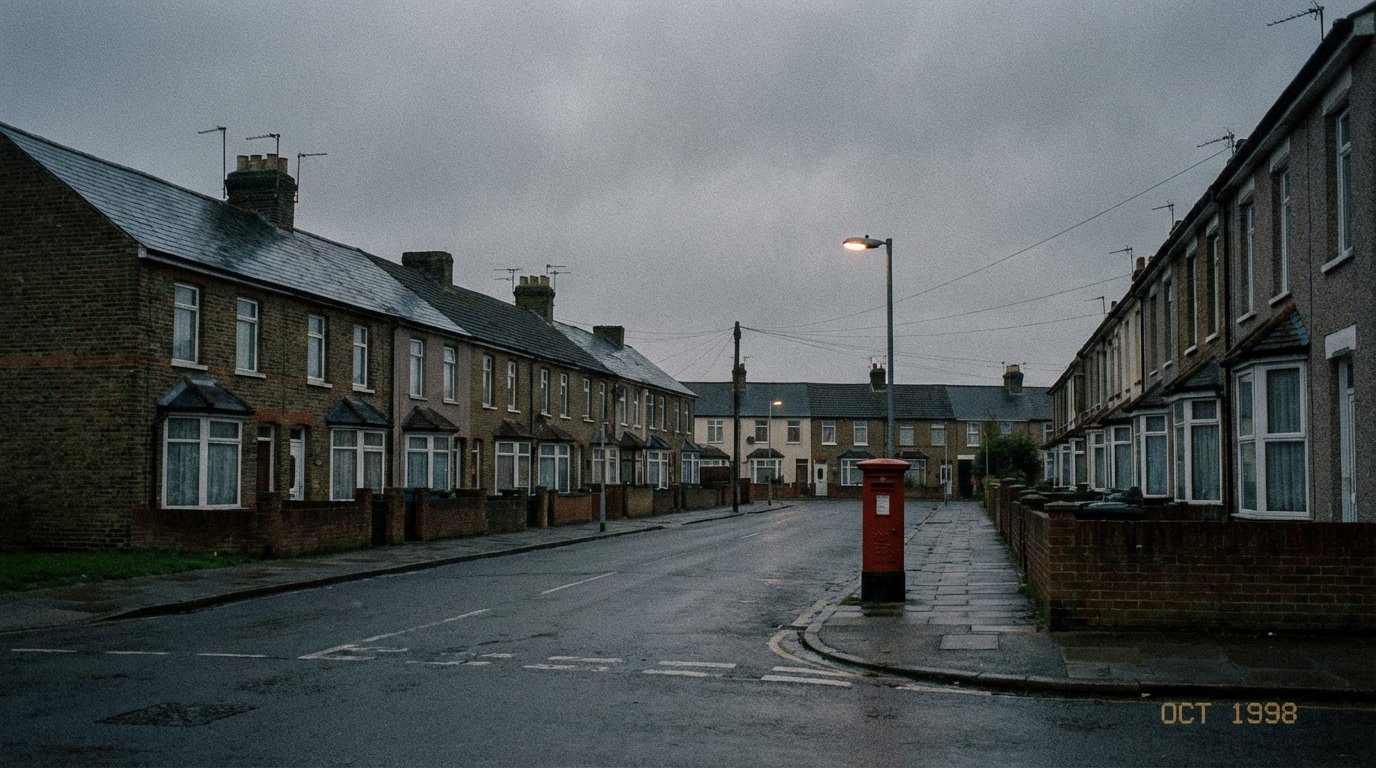
The Scene
Where UK skate-punk lives: commuter towns, estate skateparks, charity-shop record bins, and the venues that put on all-ages shows.
A long-running independent guide to British skate-punk: the scene that built it, the albums that defined it, and the cut-and-paste aesthetic that still photocopies onto bedroom walls every weekend.
Read the history
Four pillars of the British skate-punk world. Skip the encyclopaedia entries. Each page is a focused, opinion-led guide written by someone who has been in the scene since the 2010s.
Where UK skate-punk lives: commuter towns, estate skateparks, charity-shop record bins, and the venues that put on all-ages shows.
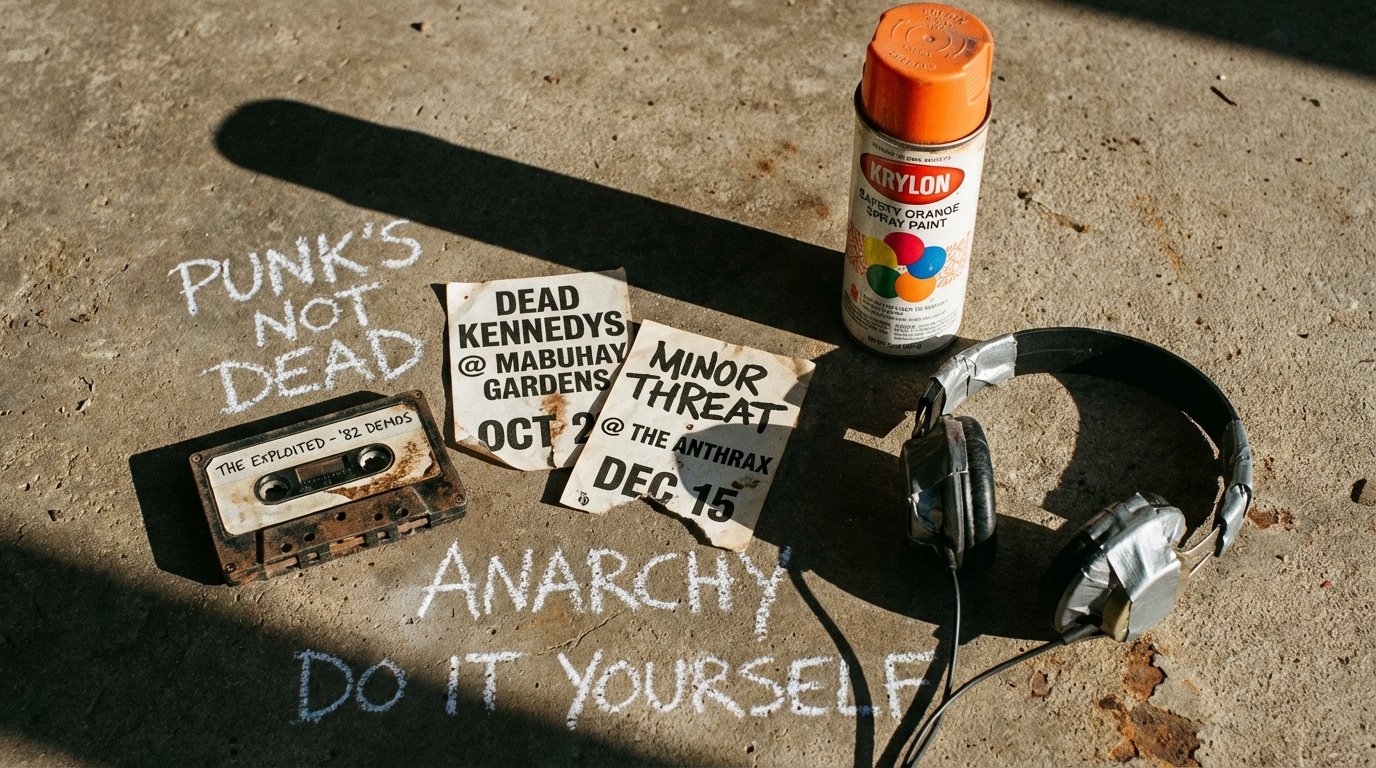
From 77 Pistols to 90s Fat Wreck to the 2010s sample-rap-punk crossover. A British timeline that explains why skate-punk sounds the way it does today.
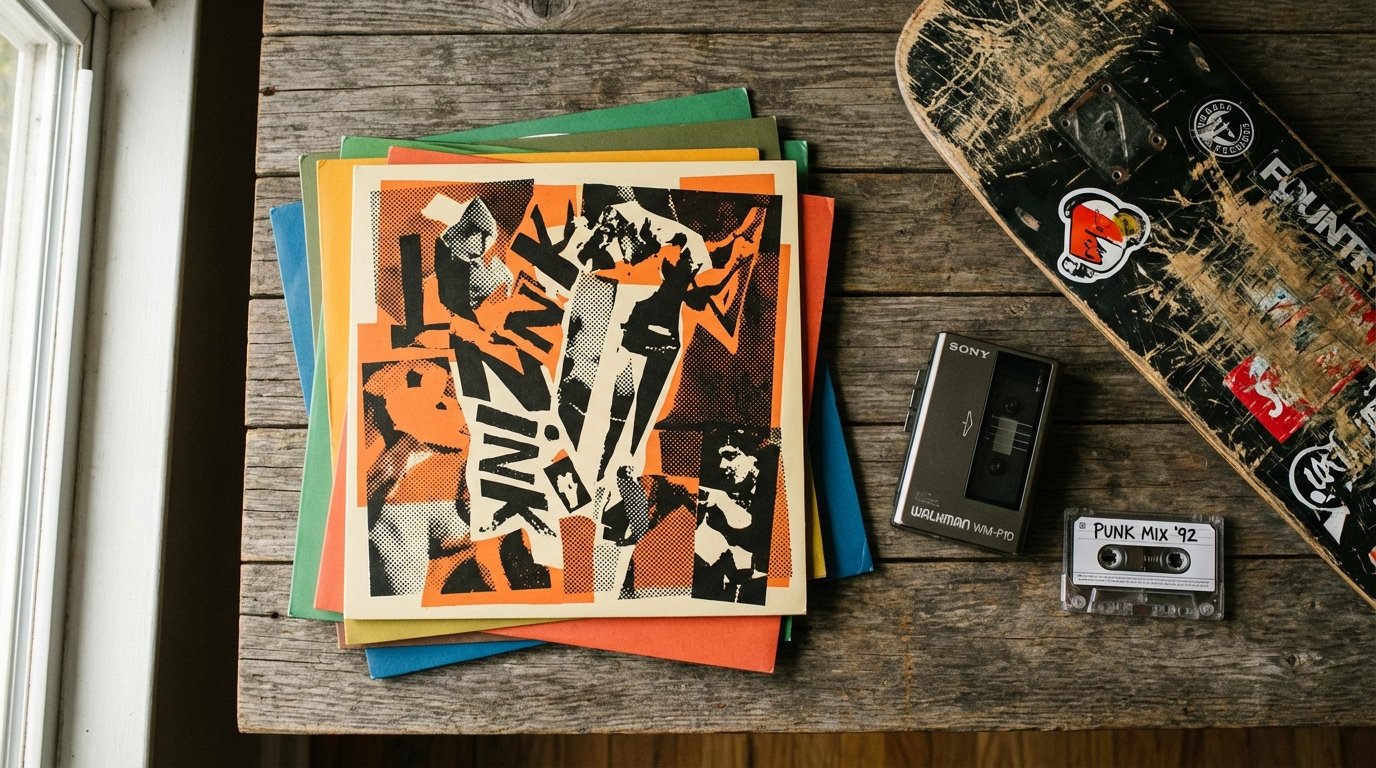
The records that built the canon: Clash, Specials, Rancid, Refused, plus the 2010s UK sample-punk wave.
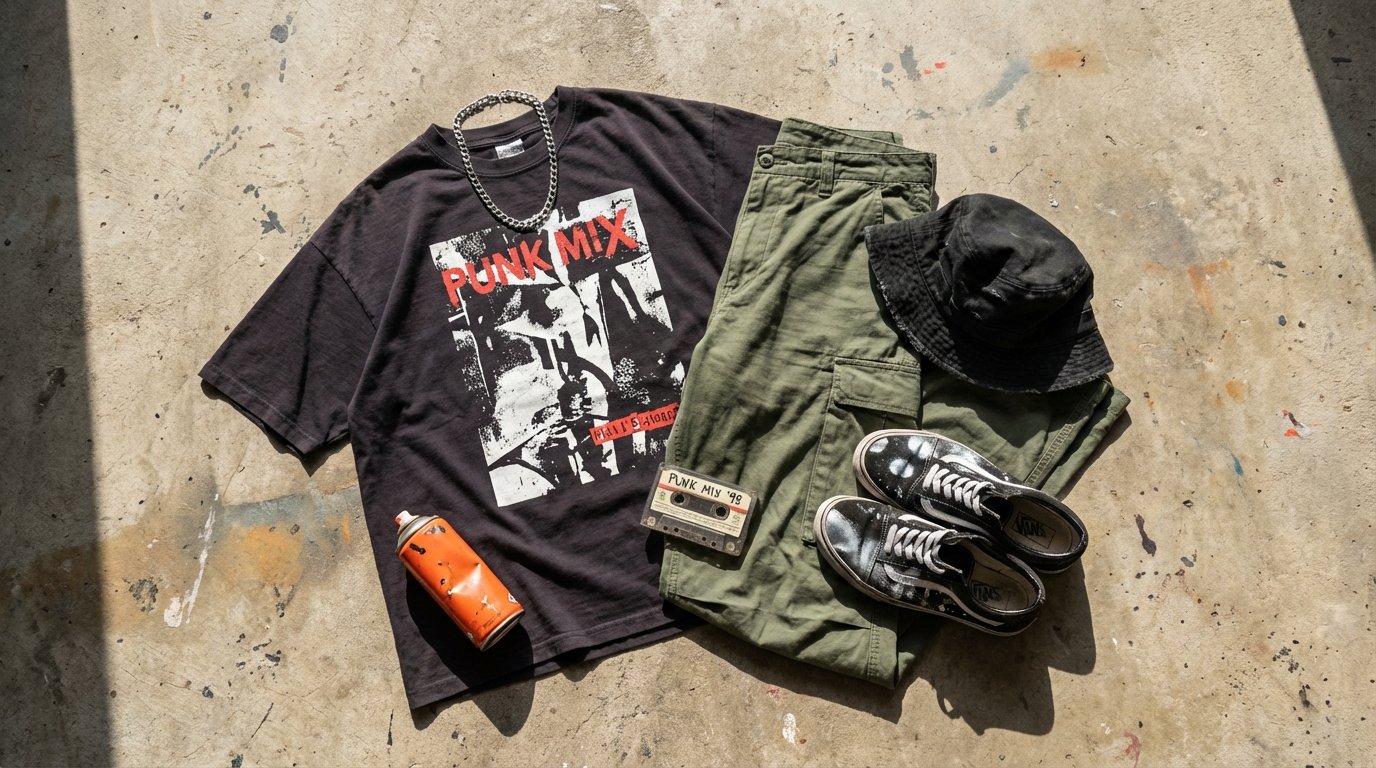
Bucket hats, Vans, oversized tees, two-tone checkerboard, and the Jamie Reid cut-and-paste DNA you see on every UK punk flyer.
Ratboy is not a band fan site, and not a generic "what is punk" Wikipedia mirror. The focus is the British skate-punk scene as a culture: the towns, the venues, the records, and the look. Where a guide names artists or labels, it is to anchor a point about the scene, not to chase celebrity coverage.
Every guide is written by Callum Pryce, a UK music writer who has been in and around this scene for most of two decades. Read the about page for the editorial line and contact details.